Artificial Intelligence & Machine Learning

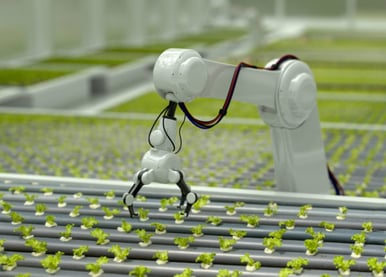
Artificial intelligence can allow manufacturers to build prediction into their processes, fixing equipment before it breaks down, responding in real time to changes in customer demand, or managing risks of supply chain disruptions. AI can also be used to make products and machines work like we do—they can learn by example, solve problems, see and recognize objects, understand and respond to voices, teach themselves, and operate on their own – like self-driving cars. All this depends on the ability of computers to process enormous quantities of data, solve problems, and find patterns within them, in ways that would be impossible without them. Many of the tasks we assign it would be too repetitive or too big for humans to calculate. But A.I.’s also tackling the greatest challenges facing humanity today, from climate change and COVID-19, to world hunger, and are inevitably going to play an even larger role tomorrow.

deep_learning
Did you Know?

Software Developer

A software developer applies principles and techniques of computer science, engineering, and mathematical analysis. As a software developer, you’d lend your talent to helping solve problems that help the world move more quickly and efficiently. Developing new algorithms and AI applications, software developers can help solve problems for manufacturers and their customers in fields like medical, industrial, military, communications, aerospace, business, scientific, and general computing, and even future proof against problems we haven’t encountered yet. There’s almost no end to job possibilities in advanced manufacturing for ambitious young coders, software developers, and AI engineers.

Machine Learning Engineer

Machine learning engineers sit at the intersection of software engineering and data science. Machine learning engineers build programs that control computers and robots. The algorithms developed by machine learning engineers enable a machine to identify patterns in its own programming data and teach itself to understand commands and even think for itself. This is tremendously beneficial for manufacturing lines, as machines can learn to adapt to changing products on the line, for example switching from one car model to another, which saves time and allows for more product to be made, more efficiently. And it is what builds the autonomy into self-driving cars and robots.

Data Scientist (Deep Learning)

This job involves quantifying data in order to make production run more efficiently. In order to make the most of production processes, manufacturing companies must analyze internal equipment and factories as well as external market factors and logistics. These trained professionals combine expertise in traditional management with knowledge of the latest innovations in big data.